
Landscapes

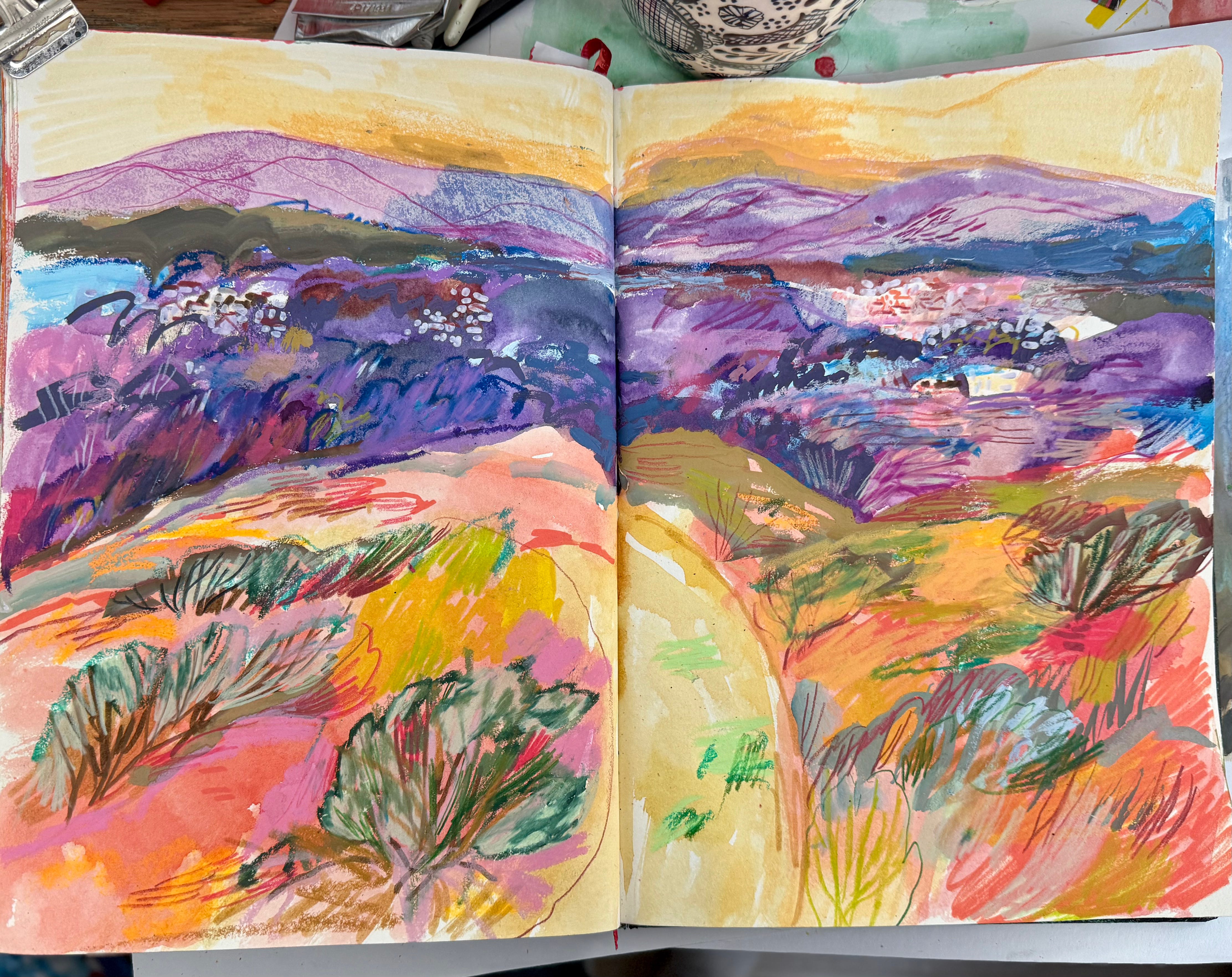
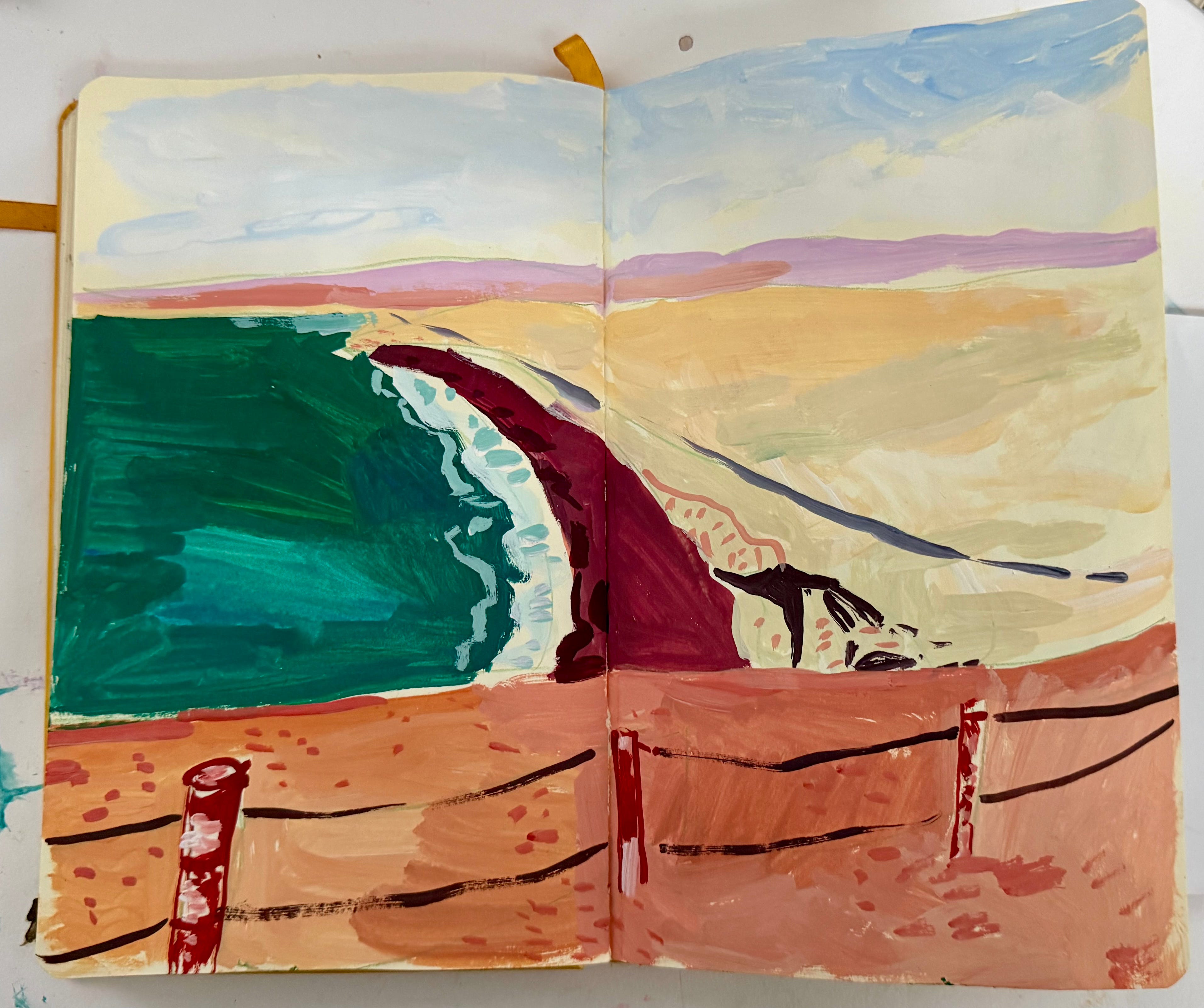
I have been painting and drawing a range of subjects (as usual); however, I’ve been particularly enjoying mixed media landscapes.
Many of these works have been deliberately loose and playful. They live in various sketchbooks and are often painted over older paintings. I find myself preoccupied with the idea of creating a body of work that can be continually revisited — pieces I can return to when I feel the pull to shift a colour or add more mark-making. I am always drawn to layers. I like the idea of burying older paintings and drawings while leaving glimpses of previous textures and marks to emerge through the surface.
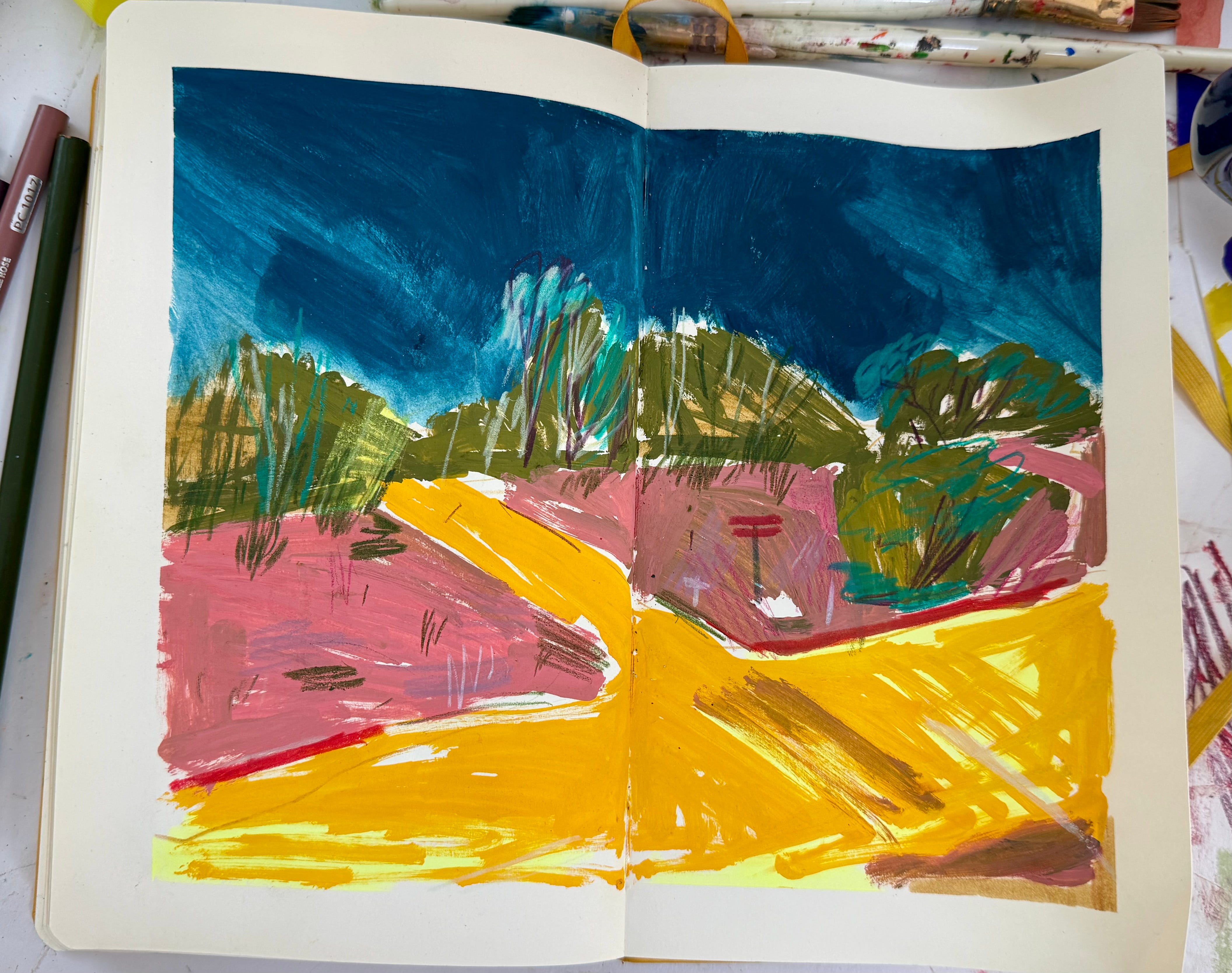
The risk, of course, is going too far — and I frequently do. But I don’t mind a declutter. There is always the possibility that an old work needn’t be discarded entirely; it can be cut up and reused as collage material or rescaled to create a more interesting composition.
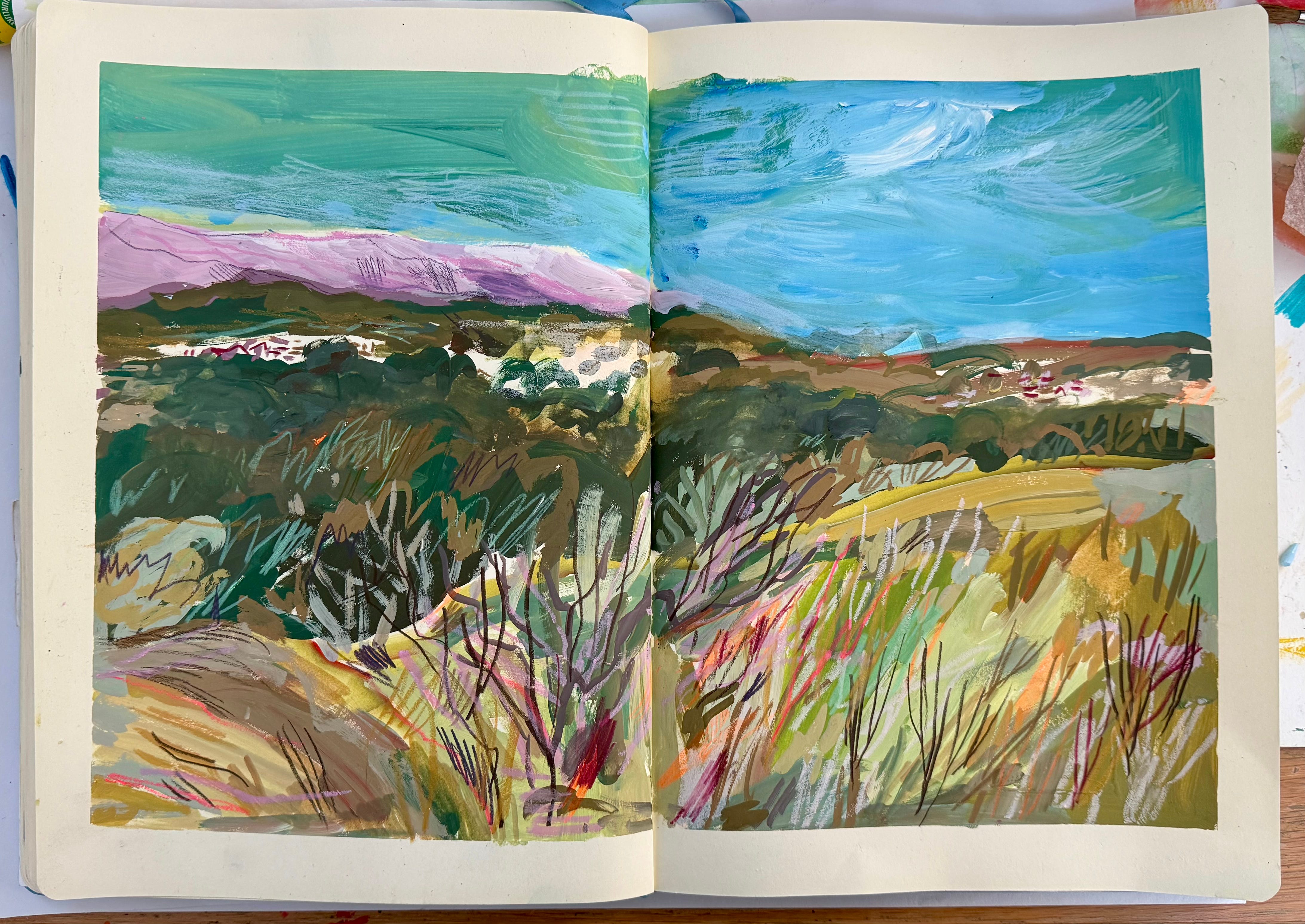
Drawing and painting from memory and past sketches has been the most effective way for me to loosen up and bring more of my own mood into a landscape. When I rely too heavily on photo references — or even spend a long time painting plein air in one setting — I can become bogged down in detail. That said, I still want to return to more realistic gouache landscapes and slow down with urban sketching. I value being able to change the way I practise art, recently I’ve been seeking a more joyful, spontaneous approach, partly because I’ve had less time to devote to it.
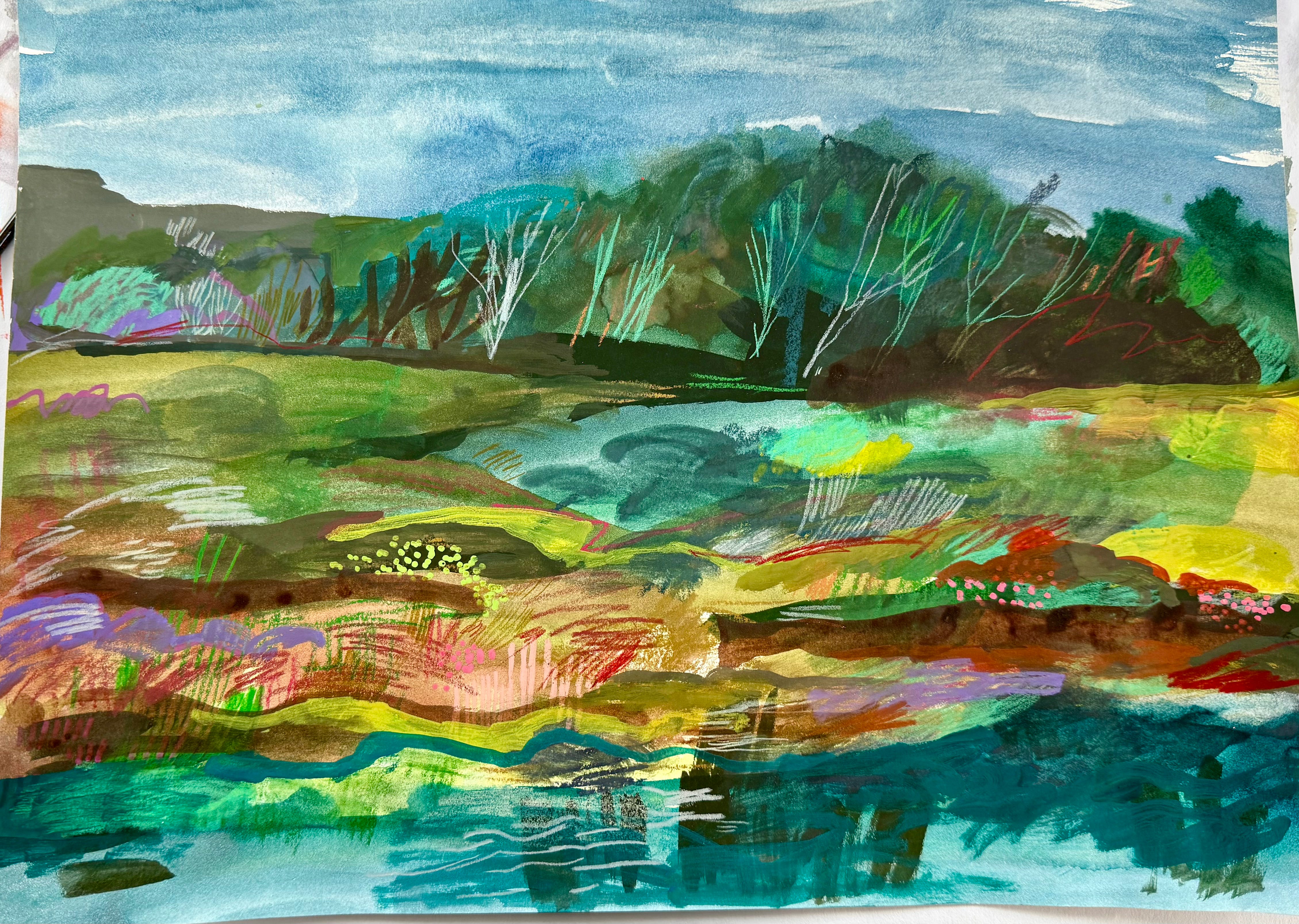
Working quickly and tuning out the more judgmental part of my mind allows me to enjoy the process. As artists, we hear so much about play being essential, yet as adults, it can be strangely difficult to feel truly free and playful in an art session.
As a runner training for my first marathon, I have heard and read alot about the role psychology plays in our performance, and I think the same applies to art. I like approaching it as I would other disciplines or hobbies. Some days call for easy art; others invite pushing yourself, focusing on a subject, or doing research. I’ve learned the hard way to take time off when injured! and I perhaps I now apply the same thinking to art — adapting how I work based on the time I have and what I need from it.
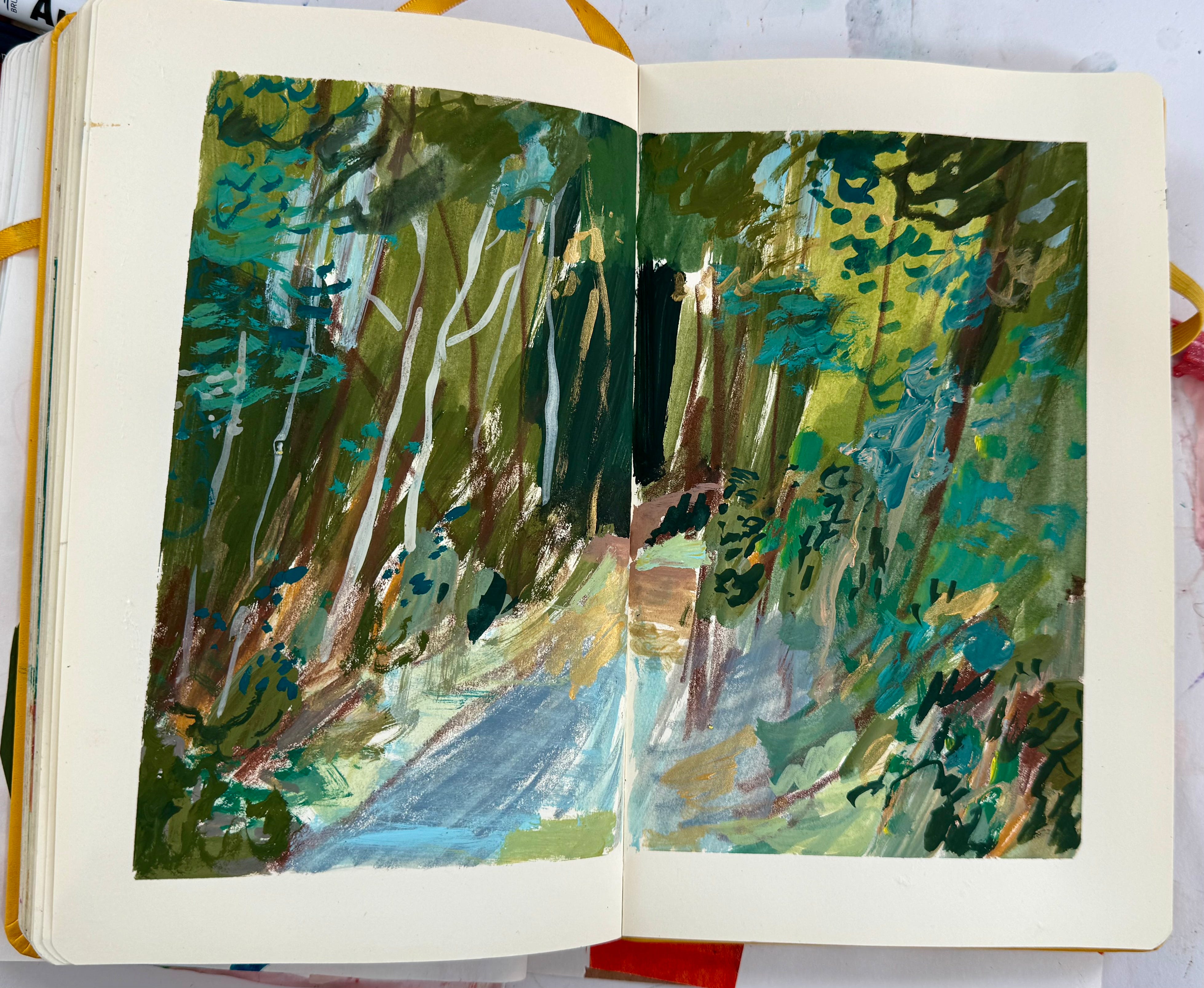
I love landscape art because it connects me to nature — to continual change, and to the inner shifts in how we might see the same scene from day to day.
If you want to bring more play into this genre, here are a few approaches that have helped me:
• Set limits. Choose three random colours to paint a scene, or three different materials if you want to explore mixed media.
• Work from memory. If drawing from memory feels daunting, sketch from a photo for three to five minutes, then put it away and finish from memory.
• Sketch outdoors with constraints. Use short time limits and non-realistic colours — choose hues that match your mood or the atmosphere rather than literal observation.
• Paint over old work. Try painting a landscape over an old piece or a disliked sketchbook page. Let parts of the previous work show through by scraping back paint or using transparent layers.
Wherever you are, I hope you are enjoying some creative time,
Best,
Sonia
Beautiful work and really great advice, thank you.
I really enjoy your work. The colour of the movement and the energy really take you into an emotion and space of the moment you’re putting on paper. Did you ever see the movie with Robin Williams where he was a painter who dies and goes to rescue his wife in the afterworld there’s moments of that where he’s inside his own painting and these remind me of that a little bit